 CONTACT




- ERNs
- Patient Stories
- URBAN’S STORY
URBAN’S STORY
When I first learned about European Reference Networks (ERNs) for rare diseases, I immediately saw a vision of hope.
A system where expert centres across Europe exist and where local clinicians – often caring for the only patient with a specific rare condition in their country – can ask questions and receive guidance from expert centres. A system where knowledge travels to the patient, instead of families being forced to chase it across borders.
For families like mine, this vision is not optional, it is essential.
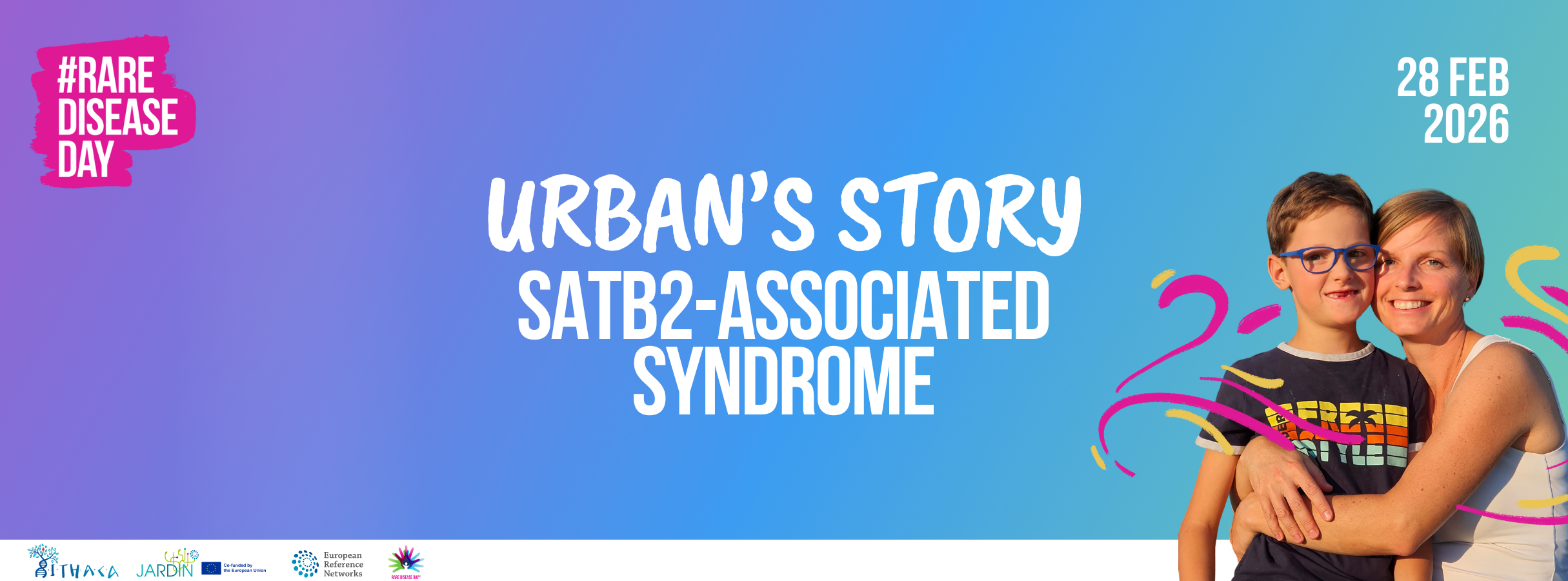
I am a mother of a child with a rare neurodevelopmental disorder. My son, Urban, has SATB2-associated syndrome and was the first diagnosed case in our country. For 7 years we lived without a diagnosis although actively searching it, and even after receiving one, we were still alone – without local expertise, clear guidance, or a roadmap for care.
My background is in clinical pharmacy and healthcare research, yet lived experience showed me how easily families are left to navigate rare diseases on their own. This is why I joined ERN ITHACA and become an active advocate – not only for my son, but so that no other family would have to walk this path without support and expertise.
Over the past three years as part of ERN ITHACA, I have shared our experience of a long diagnostic journey and other challenges we are facing with clinicians across the network, facilitating meaningful dialogue between patient advocates and healthcare professionals to help develop practical solutions.
My most significant project as a patient advocate has been chairing the First Global Clinical Practice Guidelines for SATB2-Associated Syndrome, an effort that is still ongoing. Throughout this process, ERN ITHACA has provided support at every step, giving us the opportunity to make significant improvements in care and outcomes for our community for which I am immensely grateful.
ERNs are not abstract structures. When they work, they change lives.
They turn isolation into connection, allow knowledge to travel to the patient, and support clinicians who want to help but lack experience. Most importantly, they ensure that rare disease families are no longer left to rely solely on personal resilience or endless searching but are given the confidence that their child is seen, understood, and supported – regardless of where they live.
This is the Europe we should strive for: one where, in every country, patients and clinicians can easily access validated resources, expert guidance and appropriate care.
ERNs may not remove the burden of rare diseases, but they ensure no one has to face it alone.
And sometimes, that makes all the difference.


