 CONTACT




- ERNs
- Patient Stories
- PETRA’S STORY

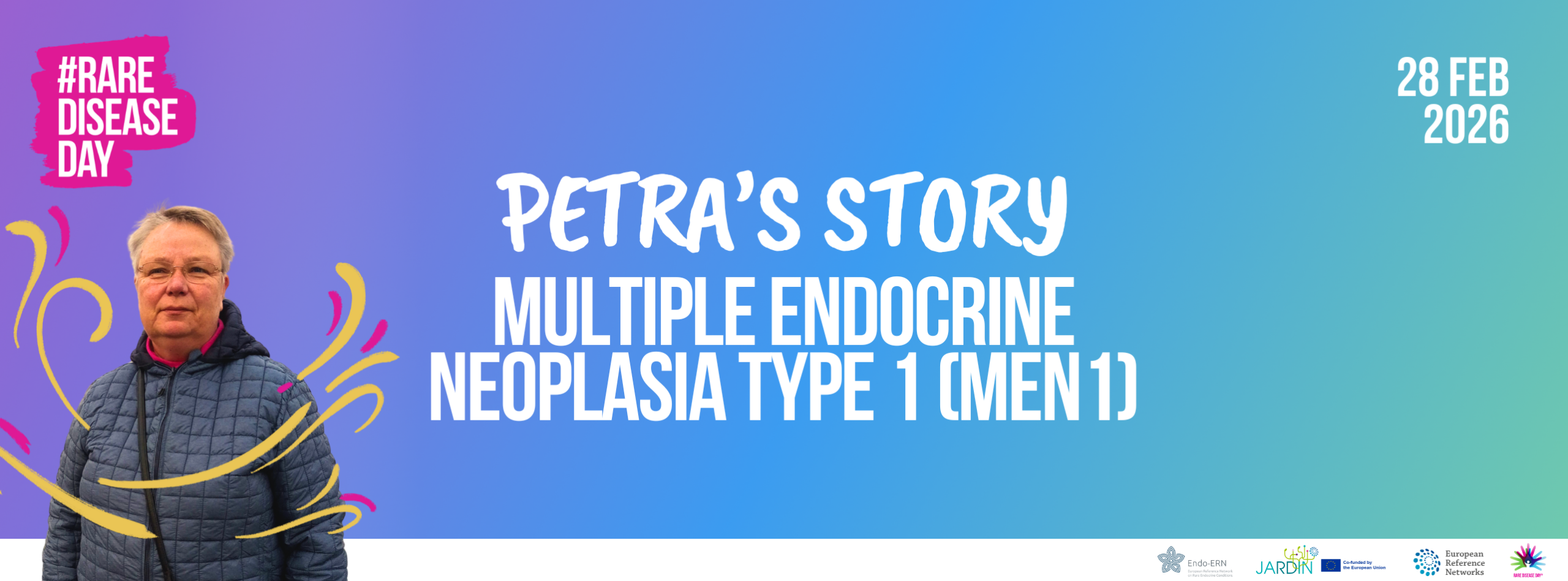
A lifetime living with #raredisease
I am a person living with a rare endocrine condition. I have a rare inherited condition called Multiple Endocrine Neoplasia type 1 (MEN1). MEN1 affects hormone-producing glands and leads to the development of multiple tumours. These tumours are often benign, but they can become malignant or hormone-active over time, which can cause serious health problems. This means lifelong monitoring and, for many patients, repeated treatments or surgeries.
I was born with this condition but not diagnosed until my late teens, I am now 66. The first clear symptoms I suffered from were kidney stones and I was very lucky to have a very experienced physician who had a clue about what was going on. Without that experience, the diagnosis might have taken much longer. From the first symptoms to the diagnosis, it took about one year. Very unusual even nowadays.
What made a difference for me was that I wasn’t alone in the search for answers. My whole family on my father’s side supported the effort to understand what was happening to me. We took part in early research, including repeated blood tests, contributing to the search for the MENIN gene.
It is difficult for people to understand that you are ill if you don’t look ill. That is the case for me – I mostly look healthy. But I live with illness and the uncertainty about what will happen next -which new tumour- this is a real daily challenge for me and my family.
Over the years, I have learned how important specialised care and shared expertise are for rare endocrine disorders like MEN1. Not every doctor has experience with this condition. This is why European collaboration is so important.
I have visited and received care from an Endo-ERN member centre. I have also submitted information to the EuRREB registry with the hope that this information will help the researchers and improve care for all patients. I am also an ePAG representative and actively involved in patient advocacy. For me, it is important not only to receive care, but also to contribute.
One important achievement for me is my contribution in support of the new MEN1 clinical recommendations with the creation of a layperson version of the MEN1 recommendations. The hope is that this type of resource can help patients and families better understand what to expect after diagnosis and how to manage this lifelong condition.
Being an ePAG means bringing the patient perspective into discussions with healthcare professionals and sharing real-life experience, to help ensure that care pathways reflect what living with MEN1 is really like. For me, it also means helping other patients become better informed about their care and treatment, which can give back a sense of control.
I am sharing my story to raise awareness of MEN1 and the importance of the EuRREB registry, as well as patient organisations such as the European MEN Alliance and the German Network of Pituitary and Adrenal Disease. Together, we support patients across Europe, share knowledge, and reduce isolation. We welcome collaboration with more patient groups, including helping to establish new ones where none exist. Endo-ERN is there for patients, providing access to specialised expertise and high-quality care across borders.
After more than six decades with MEN1, I believe sharing knowledge is the key to better care and better living.
Ein Leben lang mit einer #seltenenKrankheit
Ich lebe mit einer seltenen endokrinen Erkrankung. Ich habe eine seltene endokrine Erkrankung namens Multiple endokrine Neoplasie Typ 1 (MEN1). Multiple endokrine Neoplasie Typ 1 (MEN1) ist eine seltene Erbkrankheit, die die hormonproduzierenden Drüsen betrifft. Sie führt zur Entwicklung mehrerer gutartiger Tumore, die aufgrund einer Überproduktion von Hormonen zu Gesundheitsproblemen führen können, aber auch maligne werden können. Das bedeutet lebenslange Überwachung und für viele Patienten wiederholte Behandlungen oder Operationen.
Ich wurde mit dieser Erkrankung geboren, aber erst als Teenager diagnostiziert. Ich bin jetzt 66 Jahre alt. Die ersten eindeutigen Symptome, unter denen ich litt, waren Nierensteine, und ich hatte großes Glück, einen sehr erfahrenen Arzt zu haben, der eine Ahnung davon hatte, was los war. Ohne diese Erfahrung hätte die Diagnose möglicherweise viel länger gedauert. Von den ersten Symptomen bis zur Diagnose vergingen etwa ein Jahr. Das ist selbst heutzutage sehr ungewöhnlich.
Was für mich den Unterschied ausmachte, war, dass ich bei der Suche nach Antworten nicht allein war. Meine gesamte Familie väterlicherseits unterstützte mich dabei, zu verstehen, was mit uns geschah, sie litten unter derselben Erkrankung. Wir nahmen an frühen Forschungsarbeiten teil, darunter wiederholte Bluttests, und trugen so zur Identifizierung des MENIN-Gens bei.
Es ist für Menschen schwer zu verstehen, dass man krank ist, wenn man nicht krank aussieht. Das ist bei mir der Fall – ich sehe meistens gesund aus. Aber ich lebe mit einer Krankheit und der Ungewissheit, was als Nächstes passieren wird – welcher neue Tumor – das ist für mich eine echte tägliche Herausforderung und meine Familie.
Im Laufe der Jahre habe ich gelernt, wie wichtig spezialisierte Versorgung und gemeinsames Fachwissen für seltene endokrine Erkrankungen wie MEN1 sind. Nicht jeder Arzt hat Erfahrung mit dieser Erkrankung. Deshalb ist die europäische Zusammenarbeit so wichtig.
Ich habe ein Endo-ERN-Mitgliedszentrum besucht und mich dort behandeln lassen. Außerdem habe ich Informationen an das EuRREB-Register übermittelt, in der Hoffnung, dass diese Informationen den Forschern helfen und die Versorgung aller Patienten verbessern werden. Ich bin auch Vertreterin der ePAG und engagiere mich aktiv für die Interessen der Patienten. Für mich ist es wichtig, nicht nur versorgt zu werden, sondern auch einen Beitrag zu leisten.
Eine wichtige Errungenschaft für mich ist mein Beitrag zur Unterstützung der neuen klinischen Empfehlungen zu MEN1 durch die Erstellung einer Laienversion der MEN1-Empfehlungen. Die Hoffnung ist, dass diese Art von Ressource Patienten und Familien helfen kann, besser zu verstehen, was sie nach der Diagnose erwartet und wie sie mit dieser lebenslangen Erkrankung umgehen können.
Als ePAG-Mitglied bringe ich die Perspektive der Patienten in Diskussionen mit medizinischen Fachkräften ein und teile Erfahrungen aus dem wirklichen Leben, um sicherzustellen, dass die Behandlungswege die Realität des Lebens mit MEN1 widerspiegeln. Für mich bedeutet es auch, anderen Patienten zu helfen, sich besser über ihre Versorgung und Behandlung zu informieren, wodurch sie ein Gefühl der Kontrolle zurückgewinnen können.
Ich teile meine Geschichte, um das Bewusstsein für MEN1 und die Bedeutung des EuRREB-Registers sowie von Patientenorganisationen wie der European MEN Alliance und dem Deutschen Netzwerk für Hypophysen- und Nebennierenerkrankungen zu schärfen.


