 CONTACT





- ERNs
- Patient Stories
- MARTA'S STORY

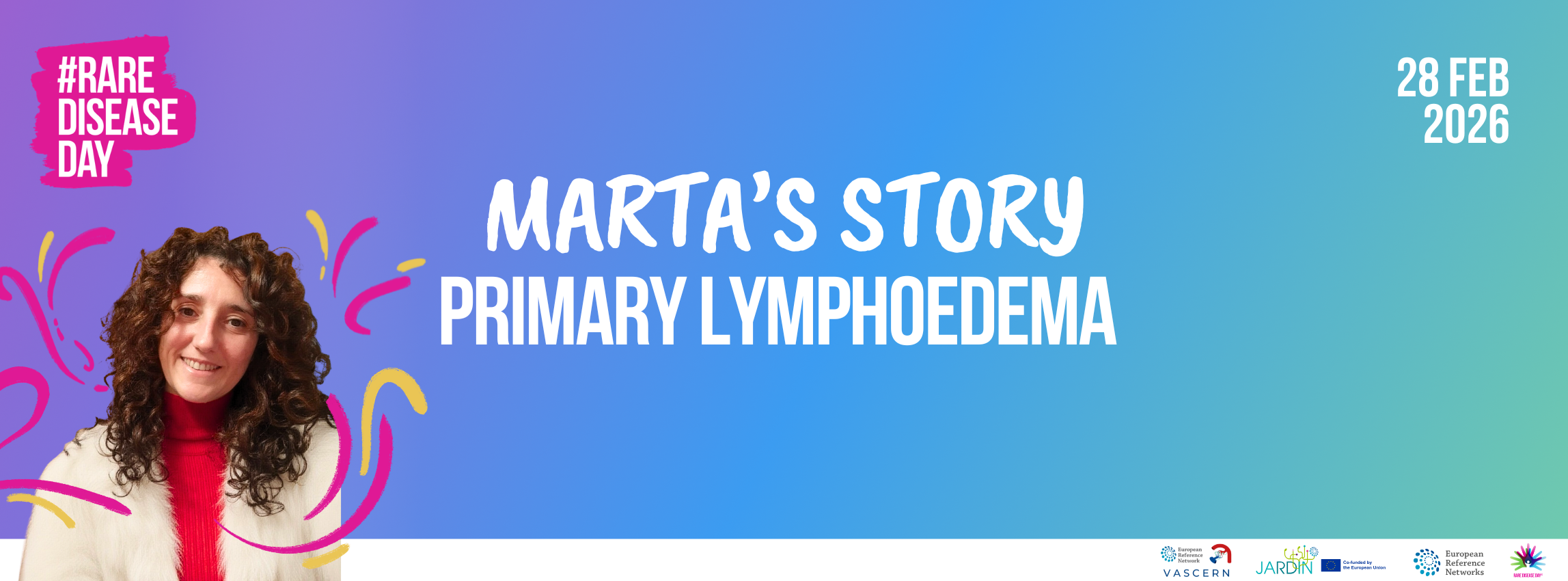
I was thirty-five years old when my life quietly changed. It happened after a ski trip with friends—nothing unusual, just a few days of snow, laughter, and frozen fingers. But soon after returning home, I began to notice a swelling in my leg that shouldn’t have been there. I assumed it would fade, the way bruises or small injuries do after exertion. I was healthy, active, and I believed that my body always knew how to find its balance again.
Weeks passed, then months. The swelling didn’t go away. It became part of me—uninvited, silent, and insistent.
At first, I thought there would be a simple cure. I visited doctors who ran tests, suggested treatments, and didn´t explain much to me about the disease. Nothing really changed. Nobody mentioned “primary lymphoedema” at the time. I didn’t know what it meant, and perhaps I didn’t want to. It was easier to think that whatever was wrong would simply disappear, that one day I would wake up and it would all be gone.
I kept living my life as best as I could. I worked, I exercised, I hiked, I laughed with my friends. I went to regular check-ups, but there was no deeper guidance—just a vague instruction to “keep an eye on it.” Still, I tried everything people suggested: herbal remedies, massages, alternative therapies, diets, and even a few unusual treatments recommended by well-meaning friends. And sometimes, for a while, I convinced myself that they worked.
Then came another small accident that made the condition worse. It wasn’t major—just one of those unpredictable moments that remind your life can change in a second. The swelling became harder to ignore. My leg felt heavy, not only physically but emotionally too. I missed feeling effortless, light, free.
It was during one of my regular mountain outings with my hiking club that something began to change again. That day, I saw a woman wearing a garment similar to the one that I should wear. We started to talk about the disease, and she suggested I join an association of people with a similar condition. She also recommended:
“You really should see a specialist from the public health system. They can help you understand what’s going on—and help you take real control.”
That simple piece of advice was like a door opening. Until then, I had treated my illness like an intruder I could force out. Now, for the first time, I realized I had to face it—not fight against it blindly, but learn to live with it.
When I finally saw the doctor, everything shifted. She was a rehabilitation specialist, calm and direct—someone who spoke with empathy but also with truth. She explained what primary lymphoedema really was, what I could do, and what my expectations should be.
“This disease will accompany you all your life. You will need compression all the time, take care of your wounds, don´t expose your body too long to high temperatures, and check your skin frequently.”
That was really shocking. This is very serious.
What she offered me was something far more powerful: knowledge, structure, and hope. This is a real disease forever.
From that day, I started to take real responsibility for my health. The doctor taught me how to care for my leg properly, how to use compression garments correctly, how to move and rest in balance.
During my journey living with this chronic rare disease, I met AMAL (Madrid Association of People affected by Lymphoedema and Lipedema), and I became part of the board of directors. This was a great opportunity and be part of VASCERN and bring other people with the same condition the knowledge about this rare disease, new treatments, and necessary care for a healthy life.
Wearing compression garment became part of my daily life—all the seasons, with the garment. At first, it felt strange—restrictive, visible, inconvenient. But slowly, they became my allies, silent partners who allowed me to keep doing what I loved. I continued hiking, going to the gym, and even returning to the office with more confidence. The difference now was that I did it all with awareness and respect for my body.
Primary lymphoedema didn’t take away my love for adventure; it taught me to redefine it. I stopped measuring my success by how fast I could climb, or how far I could go, and started measuring it by how present I could be in each step. Mountains haven’t become smaller or easier—but I have become more patient, more resilient, and more grateful.
I will live with lymphoedema. It’s not something I can ignore, and yes, there are hard days—days when the compression garments feel too tight, when my leg feels heavy, when I wish I could go back to the effortless freedom I once had. But there are also days filled with victory. Days when I reach a summit and feel the familiar wind on my face, knowing that I didn’t let this condition define me.
My illness is not a limitation—it’s a companion that constantly teaches me to adapt, to care for myself, and to appreciate small joys. I’ve learned that I have to come as I am, and I don´t have to limit myself, but I have to continue with awareness of my Primary Lymphoedema.


