 CONTACT




- ERNs
- Patient Stories
- MAGDALINI’S STORY

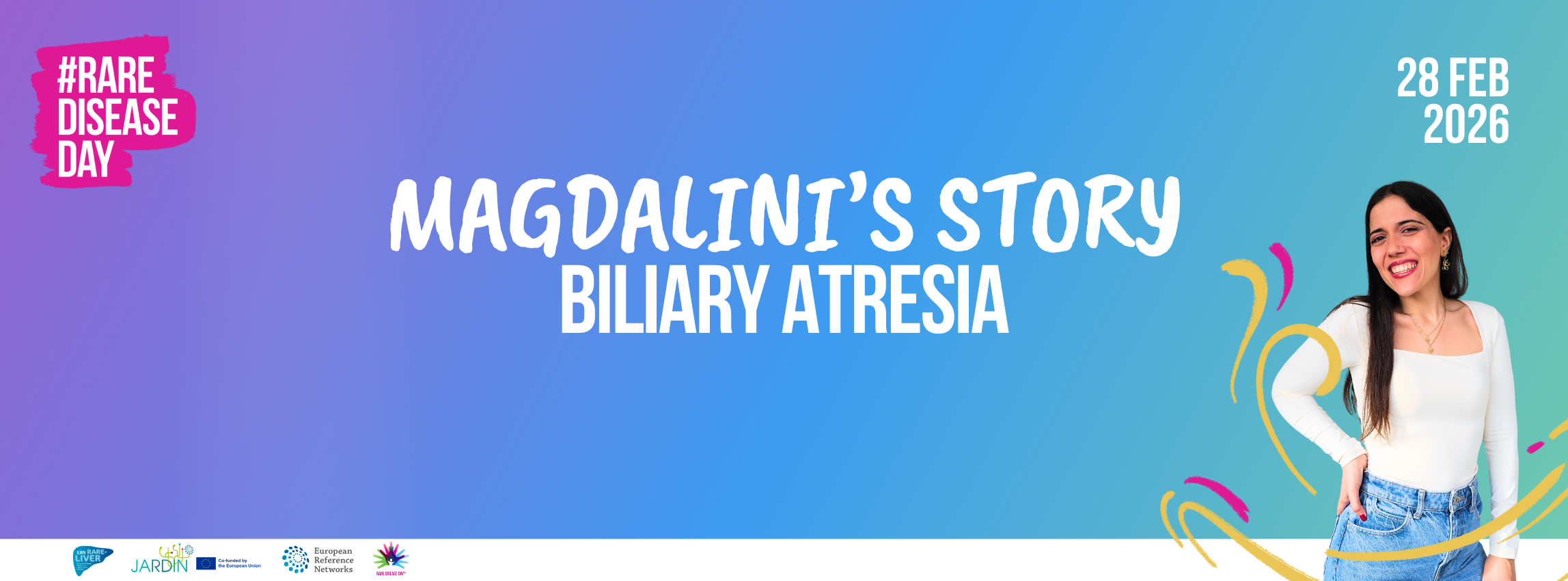
My name is Magdalini, I am 27 years old, and I was born with biliary atresia, a rare congenital liver disease that shaped my life from the very beginning. When I was born, I was the fourth child in Cyprus diagnosed with biliary atresia. The first signs appeared early — prolonged jaundice and pale-coloured stools. Thanks to early recognition of these symptoms, I was diagnosed in time, and at just two months old, I underwent my first life-saving liver surgery in Manchester. That operation gave me the chance not only to survive, but to grow, dream, and live.
Growing up with a rare disease meant that hospitals, medical appointments, and long-distance travel became part of my normal life. I travelled many times between Cyprus and London for treatments, hospitalisations, and specialist care. I experienced frequent episodes of cholangitis, serious liver infections that were painful, frightening, and exhausting.
Living with a rare disease taught me strength and resilience early in my life.
At the age of 18, I had to undergo another major liver surgery as my condition continued to challenge my body. Each setback tested not only my physical strength, but also my emotional endurance. Still, I learned how to keep moving forward, even when the path was uncertain.
At 22 years old, my journey led me to a liver transplant in London. Receiving a transplant was both overwhelming and life-changing. My donor was a 55-year-old woman who passed away and, through her generosity, gave life to me and to others.
Her gift is something I carry with deep gratitude and respect every single day.
The transplant was successful, but life after transplantation comes with its own challenges. I experienced medication side effects that required ongoing adjustments, and two years ago I faced liver rejection. Today, my liver is doing much better, but I continue to deal with some neurological issues that are still under investigation. My journey did not end with the transplant, it simply entered a new chapter.
Throughout this journey, access to specialised, coordinated care has been essential. The collaboration between expert teams across countries, as supported by European Reference Networks (ERNs), has played a crucial role in my treatment, follow-up, and long-term management. Knowing that doctors can share expertise beyond borders has given me confidence and reassurance in moments of uncertainty.
Living with biliary atresia has shaped who I am today. This condition made me stronger, more hopeful, and more appreciative of life. I have learned to see the world with positivity, even when things are difficult. Some days are still hard, but with faith, I know I can face them.
Without my condition and the experiences it gave me, I would not be the person I am today. Despite everything, I continue with hope, faith, the unconditional love of my family, my husband, my friends and the incredible support of my doctors.
Today, I share my story to raise awareness, to offer hope, and to give a voice to an invisible yet very real rare disease. For every child born with biliary atresia and for every family walking this path, you are not alone.


