 CONTACT




- ERNs
- Patient Stories
- EIRINI'S STORY

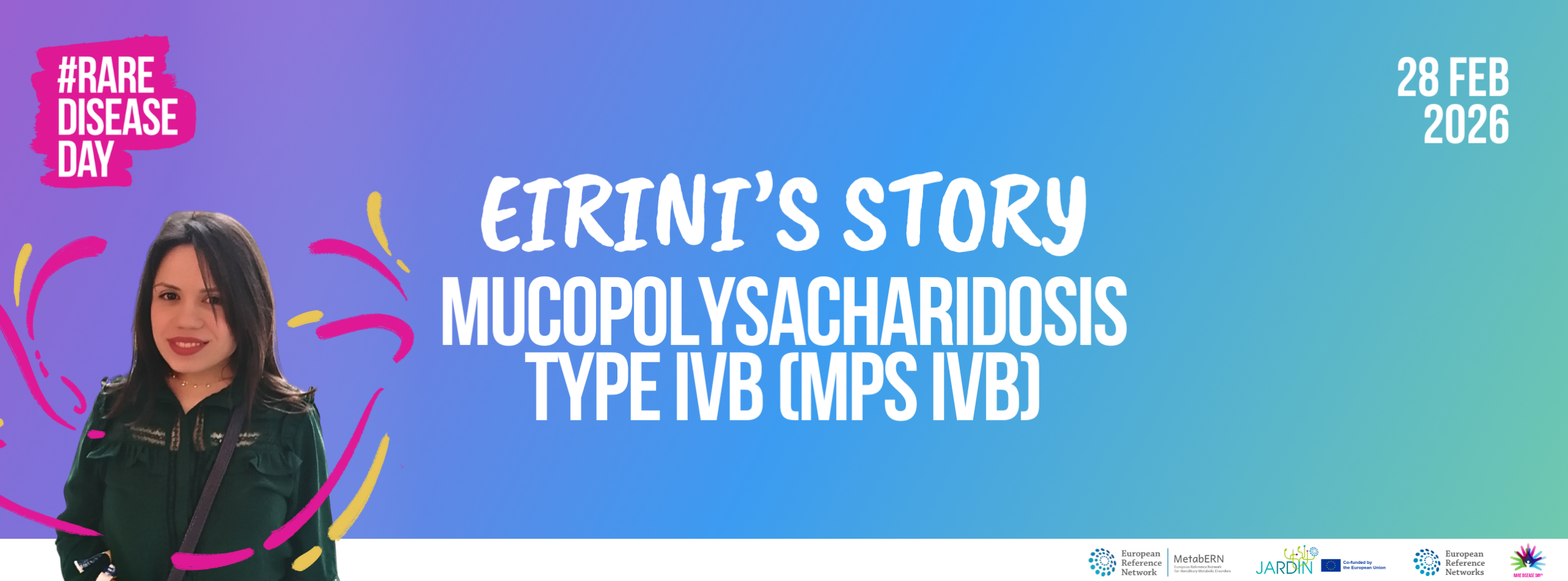
My name is Eirini and I live in Greece. At a young age, I was diagnosed with an ultrarare inherited metabolic disorder called Mucopolysacharidosis type IVB (MPS IVB) or Morquio type B.
My story begins in 2003 at the age of 5, when the first mild symptoms appeared. Although I was very young, I remember experiencing pain in my legs and difficulty walking. Initially, the pain was attributed to “normal growth”, but as my condition failed to improve, my mother sought medical advice from a couple of doctors in our region who were not able diagnose my problem. It was ultimately her persistence and instinct that something was wrong which led to my referral to a university pediatric department, marking the beginning of a long journey of medical examinations and multidisciplinary care.
We were fortunate in that a doctor of this pediatric department was the only specialist in inherited metabolic disorders in Northern Greece (one of the very few in our country) who immediately suspected the correct diagnosis. The appropriate initial testing which strengthened the clinical suspicion was done in the specialised pediatric metabolic laboratory. Because my condition is extremely rare (1:250.000-1:1.000.000 live births), the specific diagnosis with appropriate enzyme and DNA testing was performed by a laboratory in Austria with experience with my disease. Thus through international cooperation, I finally received my diagnosis at the age of 10 years. As far as I am aware, to date I am one of the five diagnosed patients with Morquio B in Greece.
I consider myself incredibly fortunate to have had such guidance: a knowledgeable and persistent doctor who refused to stop searching for answers and was determined to reach a diagnosis. Together with my mother’s instinct and unwavering insistence, my doctor’s persistence made it possible for me to be diagnosed relatively early. Without that doctor, I do not know if or when I would have received a diagnosis, or how differently my condition might have progressed. My experience underlies the difficulties in the diagnosis of ultrarare inherited metabolic diseases.
I remember that period of my life with mixed emotions. As a child, I could not fully understand what was happening, yet frequent visits to hospitals and doctors were part of my everyday life. Knowing that my condition was incurable and progressive made medical monitoring necessary and although I did not fully grasp its seriousness, it often made me feel afraid.
As I grew older, my physical limitations became increasingly evident. I experienced difficulty walking, became easily exhausted and eventually had to undergo a major surgery, which kept me out of school and bedridden for weeks. Finding doctors with the necessary expertise was challenging, as very few were familiar with my condition. I consider myself extremely fortunate to have found professionals who were willing to take responsibility, support me and closely monitor my health.
Following my surgeries, my condition remained relatively stable for several years. Although pain and limitations were part of my daily life, I continued my education, maintained friendships and pursued my interests, always supported by my family. My parents and brothers stood by me, with my mother’s support being constant and unconditional.
During my university years, my symptoms worsened significantly, making attendance physically demanding and often forcing me to miss lectures. With the unwavering support of my family, especially my mother, who moved with me and supported me in every possible way, I was ultimately able to complete my studies and earn my degree
Living with this condition brought feelings of anxiety, loneliness and grief. I could not do what most people my age could do, and I often felt that I had missed something essential, as if I had missed life itself. I was tired of constant hospital visits and medical procedures, but this was my reality. Books, music, and art became my refuge, keeping me company during difficult times. I consider myself fortunate to have family and friends who support me in everything I go through and I do.
After graduating, I underwent two more major surgeries and spent another long period bedridden. This time, however, the outcome was transformative, as I experienced life with significantly less pain for the first time. Following my recovery, I began working, started my Master’s degree and gradually became involved in patient advocacy, motivated by a desire to turn my personal experience into something meaningful and to connect with others facing similar conditions.
Through sharing my story, I aim to raise awareness of the challenges young people with rare diseases and disabilities face, including barriers in education, difficulties in the workplace and the ongoing struggle to find trusted medical care. At the same time, I believe that while illness shapes who we are, it does not define us, and maintaining this balance is essential, particularly when living with a rare disease and engaging in advocacy.
My mother is a longstanding member of “Krikos Zois” Life-Link www.krikoszois.gr),” the Panhellenic Advocate for Inherited Metabolic Disorders which was founded in 2007. It is an organization whose members inspired me to become a patient advocate through their dedication, resilience and unwavering commitment to fighting for a better future. Today, I serve as t General Secretary of KRIKOS ZOIS. MetabERN has been a valuable ally in our efforts and we are truly honored and grateful to be part of the Patient Board.
Living with a rare disease is a continuous journey of strength, patience and perseverance. While the challenges are real and often demanding, hope, knowledge and solidarity can transform uncertainty into purpose. With support, determination and collective effort, we can continue to fight for visibility, dignity and a better future where no one feels alone and where resilience becomes a shared source of strength.


