 CONTACT




- ERNs
- Patient Stories
- DALIA'S STORY
DALIA’S STORY
- February 16th, 2026
- ERN eUROGEN. ERN on uro-recto-genital diseases and conditions
-
 Italy
Italy
- Share
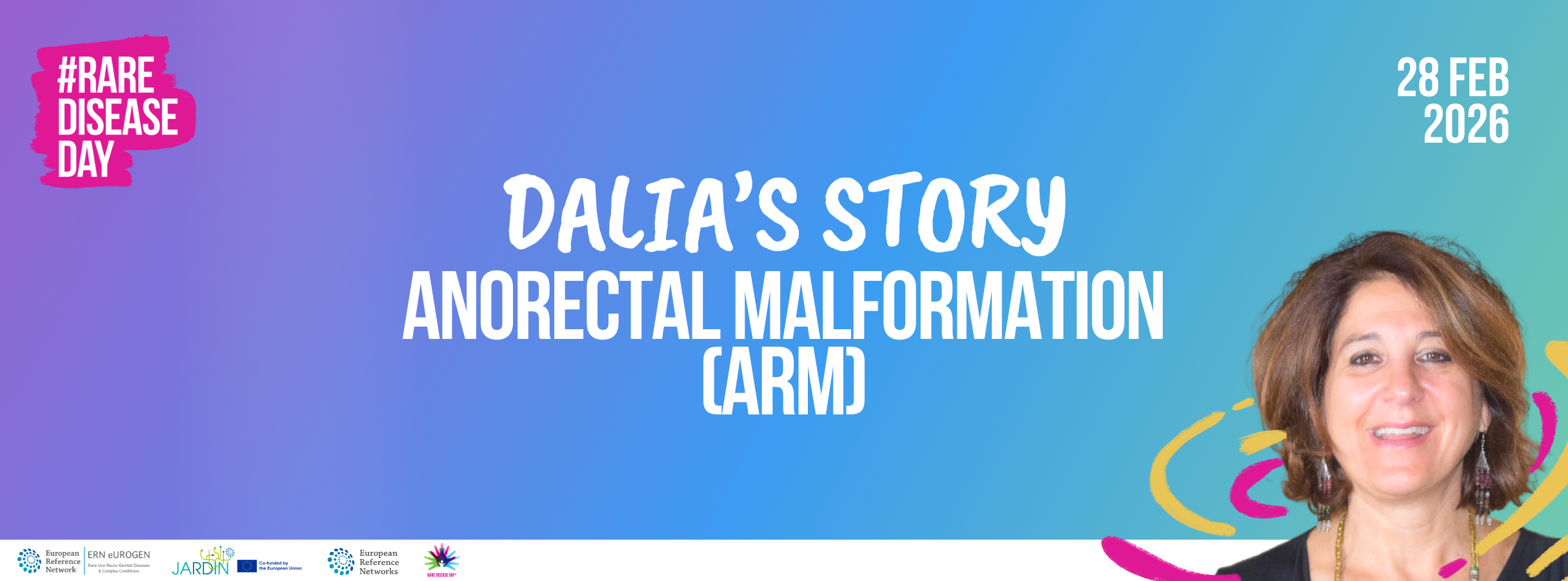
I am a mother of a boy born in 1990 with a congenital malformation called anorectal malformation (ARM). At that time, talking about rare diseases was unthinkable; there were very few large organizations, and the Internet wasn’t available.
Supporting a loved one with a rare disease has been one of the most challenging and humbling experiences of my life. From the beginning, we faced long periods of uncertainty, many operations, extremely limited information, and a sense of isolation, thinking we were the only ones who had a child with ARM. Daily life was shaped by hospital visits, complex decisions, and the emotional weight of advocating within healthcare systems unfamiliar with rare diseases.
What made the journey particularly difficult was the lack of coordinated expertise and nonprofit organizations to direct you to better care and to other families who had experienced what you were going through. We often felt that we were navigating alone, getting fragmented care, repeating the same information, and searching for specialists who truly understood the condition. As a caregiver, this was exhausting and, at times, overwhelming.
ERN eUROGEN has had a meaningful impact by helping to bridge these gaps. Knowing that there is a European network bringing together specialist knowledge, supporting cross-border collaboration, putting patient care at the centre, and promoting shared learning has provided reassurance and hope. ERN eUROGEN represents progress toward more equitable care for rare uro-recto-genital conditions, ensuring that patients and families are not limited by geography and can get better care.


