 CONTACT





- ERNs
- Patient Stories
- CORALIE'S STORY
CORALIE’S STORY
- February 16th, 2026
- ERN ReCONNET. ERN on connective tissue and musculoskeletal diseases
- Share
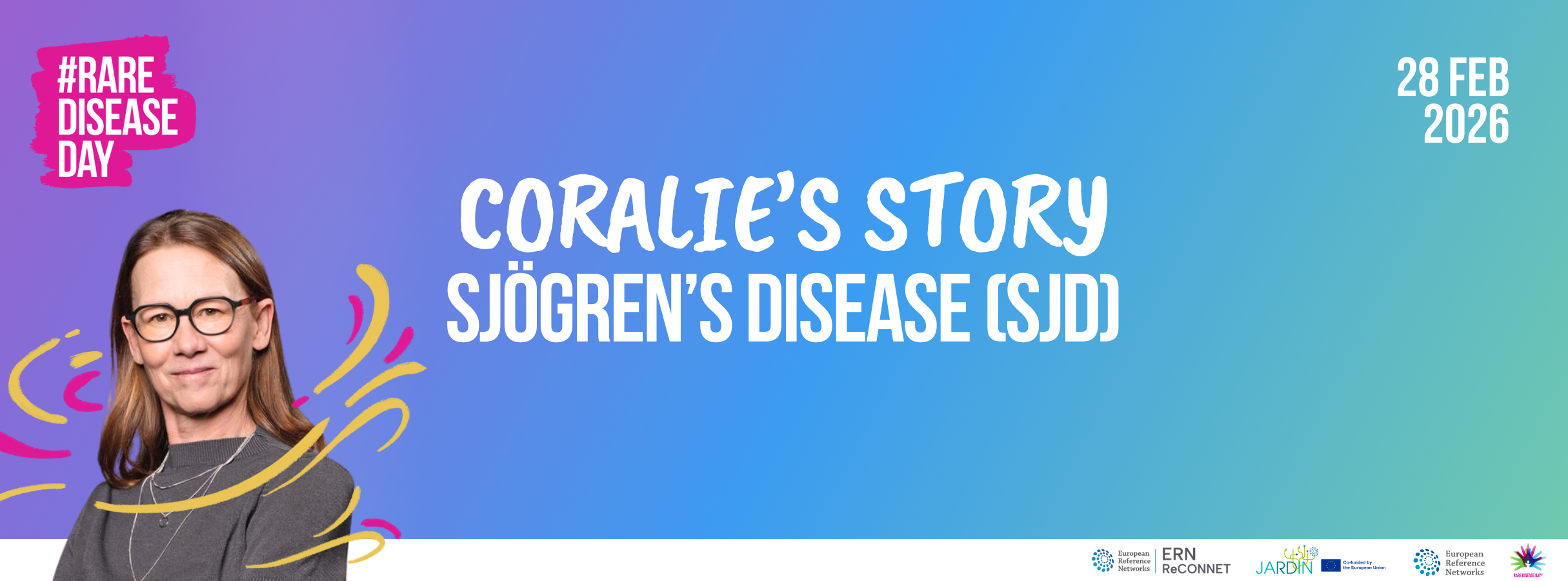
After my three pregnancies at the age of 30, I noticed the constant presence of extreme fatigue, leg pain and dizzy spells. I spoke to my GP, who told me everything was normal and that he had no concerns given my young children and my full-time job. He advised me to take some time for myself and to work on my stress levels… But the symptoms worsened over the years, and no one listened to me. I was suffering, exhausted and really losing my grip. Deep down, I knew that something was wrong and that it wasn’t caused by stress, but the initial tests came back fine, so I was sent to see a psychiatrist, with my physical symptoms being minimized and depression suspected. I was finally diagnosed with Sjögren’s disease at 40, after a severe systemic flare-up. Since then, I’ve realized that I had these symptoms since adolescence, albeit in a milder form, as I already had dry eyes at 18. I also remember seeing a neurologist for leg weakness. None of them looked any further. It was only over the years that these symptoms became permanent. None of these professionals listened to me or took my symptoms seriously. Not being heard has left indelible marks that persist today. These ten years of diagnostic wandering have truly weakened me.
There is no approved treatment for Sjögren’s disease to date and the pathogenesis is still not really known. Doctors try to relieve the symptoms (articular, muscular and neuropathic pain, fatigue, dryness, neurological issues like dysautonomia, gastro-intestinal…) but this illness is very hard to live with. Research is progressing, but the fatigue of having to fight every day, to mourn the loss of a normal life, to plan and anticipate because you never know when your body will fail you, is very real. I must also mention the emotional and psychological difficulties of living with an invisible illness that few people understand or take seriously. Mental health can be seriously affected. The lack of multidisciplinary centers is a time-consuming and exhausting reality for patients who must rush from one hospital to another to see specialists. This disease is highly heterogeneous, systemic and requires monitoring by many different medical specialties.
I am now being monitored at an ERN ReCONNET reference center, and I finally have complete confidence in the team supporting me, as they are professionals who are very knowledgeable about my illness, who participate in international research and who communicate regularly with one another for a better therapeutic approach. They are thoroughly aware of the complications and monitor accordingly.


