 CONTACT




- ERNs
- Patient Stories
- CARMEN’S STORY

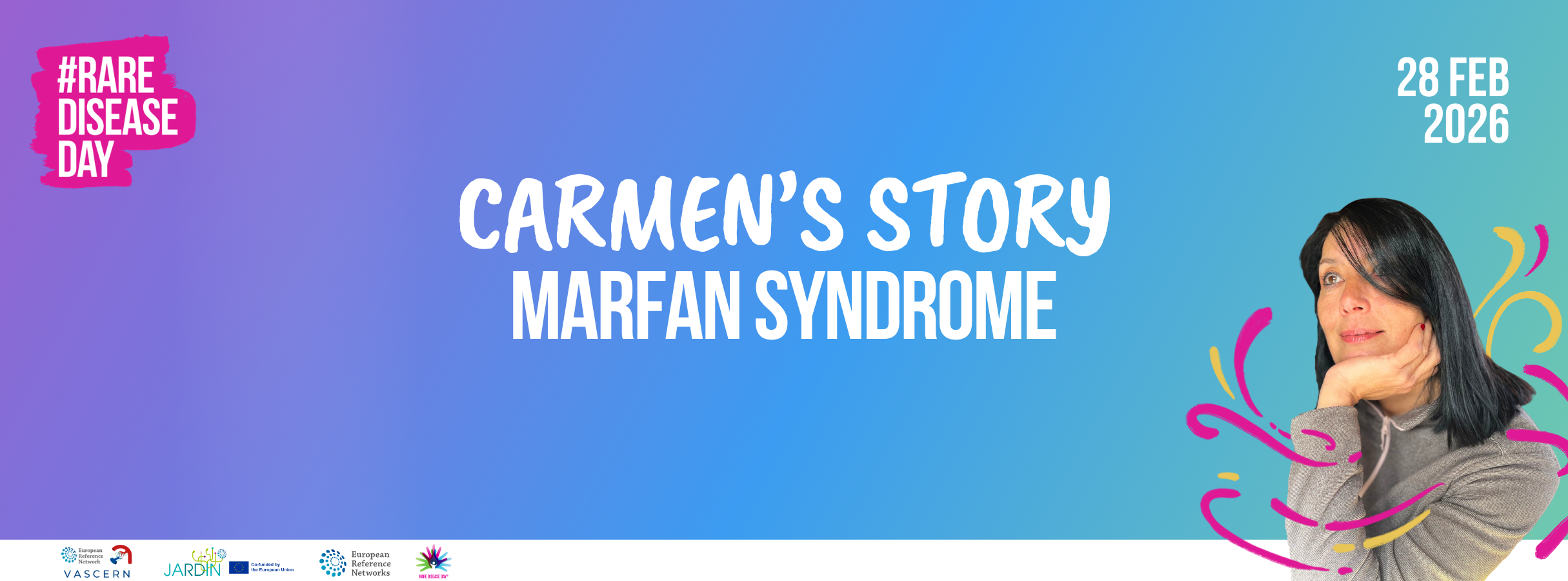
Becoming a mother is always a journey into the unknown, but nothing could have prepared me for the moment my son was diagnosed with a rare disease. At first, the word “rare” felt almost abstract—something you read about in textbooks, not something that becomes part of your everyday life. But very quickly, it became the lens through which I saw the world: hospitals instead of playgrounds, medical jargon instead of bedtime stories, and uncertainty instead of clear answers.
My son has Marfan syndrome. Simply putting a name to his condition was the first step on this path.
The road to diagnosis took over three years. When the confirmation finally came, it was devastating—not just because of the disease itself, but because there was no clear treatment and so little information. I felt lost, as if the ground had been pulled out from beneath me.
Life changed overnight. My son’s condition demanded constant attention—medication, appointments, and endless research. I learned to read medical reports, manage complex schedules, and advocate fiercely for his needs. I became not just a mother, but also a nurse, a researcher, and sometimes a warrior.
In those early days, the support we received from the Spanish Marfan Syndrome Organisation gave me the strength to stop crying, stand up, and start working with them. They took the time to explain everything they knew and answered every question our family had.
Emotionally, this journey has been overwhelming. There are days filled with fear, frustration, and exhaustion. Watching your child struggle is a pain that words can barely capture. But there are also moments of unexpected strength and love. My son has taught me patience, resilience, and the true meaning of courage. Two years ago, after emergency surgery, he looked at me and said: “Mum, I’ll take care of myself and my condition, but I won’t live in fear. I’ll fight for my dreams and for my life.”
Those words stay with me every day. He is teaching me what it truly means to live.
Living with a rare disease can be incredibly isolating. Many people have never even heard of Marfan syndrome. Support groups—both online and in person—have become a lifeline. Collaborating with organisations like VASCERN and patient organisations is how we can help others facing the same challenges. Together, we can make a difference.
The future may still be uncertain, but I’ve learned to take life one day at a time. This isn’t the journey I imagined, but it has shaped me in ways I never expected. Above all, it has shown me that love is stronger than fear, and that even in the face of rarity and uncertainty, life can still be meaningful and full of purpose.
To everyone working to improve the lives of those with rare diseases: thank you.


