 CONTACT




- ERNs
- Patient Stories
- KATIE'S STORY

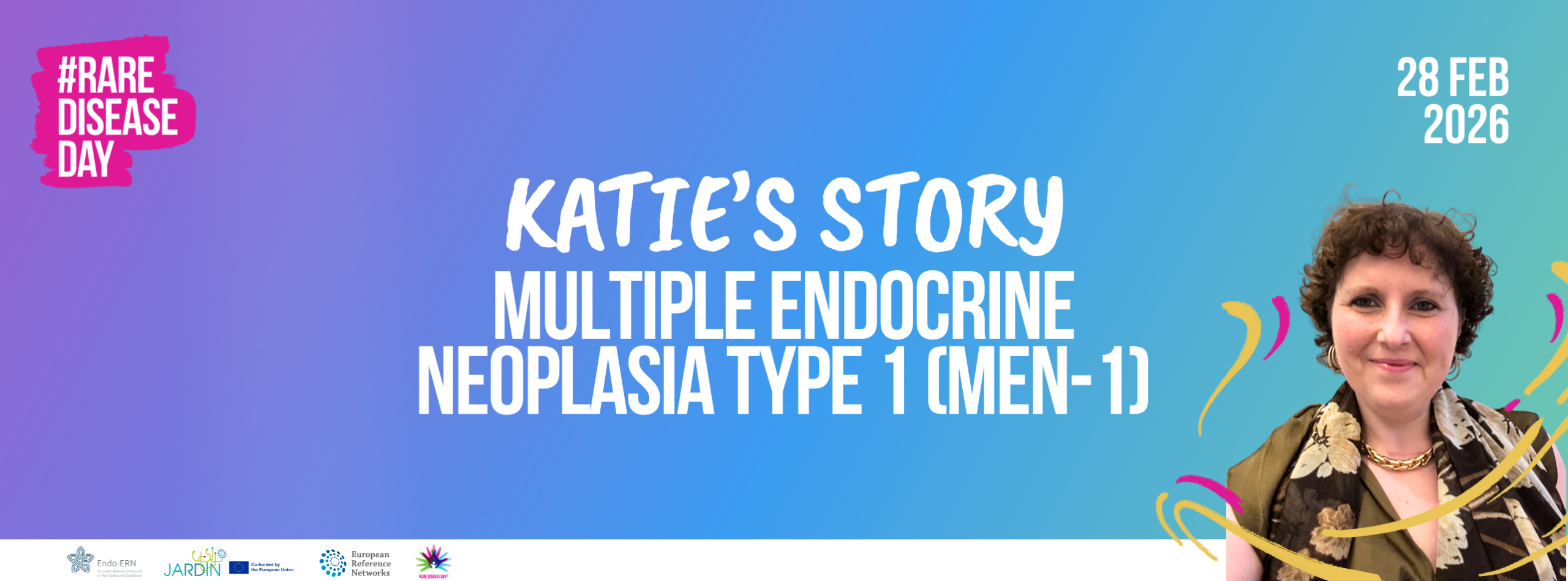
Despite living with MEN1 for decades, you would probably not be able to tell by just looking at me. Yet under the surface, I have suspicious growths on my parathyroid and pituitary glands, as well as my pancreas. Often my challenges also sit under the surface, affecting my mental health just as much as my physical health.
My formal diagnosis took place very recently, more than 20 years after the first symptoms appeared in my blood work and initial suspicions that I may be affected by this genetic disease. You see, like many rare diseases, there is no cure for MEN1. The prevalent treatment path revolves around surgically removing tumours if and when they reach a certain size. This uncertainty of how the disease would progress, and the lack of treatment options led me to put off formalising my diagnosis in case it had financial or career implications that I could not control. I’ve lost count of the times I’d asked myself if I should declare “my condition” when applying for insurance or a new job. And on the rare occasions I did mention it, I was usually met with doctors who were unfamiliar with the disease, leading to more questions than answers.
Thankfully, collaborations across the EU are changing this and knowledge now flows more easily across borders, allowing medical teams to consult and tap into expertise beyond national borders.
In 2025, after finally agreeing to genetic testing, I received my formal diagnosis, a referral to an endocrinologist, who is plugged into the latest developments at the European level, and had a surgery to remove a quarter of my parathyroid and thymus. I’m also starting to engage with patient organisations and the European Reference Network (ERN) to help raise awareness and understanding of the challenges faced by this community. Fortunately for me, there is a specific ERN that focusses on rare endocrine conditions like mine (Endo-ERN), which aims to improve access to high-quality healthcare and support for patients.
Today, more than ever, Rare Disease Day is an important symbol of understanding and hope for those of us living with a rare disease, despite the challenging global environment. I dream of better access to genetic testing and counselling, psychosocial support and ultimately successful research and clinical trials that could help to find ways to treat or cure people with MEN1, and perhaps even the possibility of preventing its development.


