 CONTACT




- ERNs
- Patient Stories
- UWE'S STORY

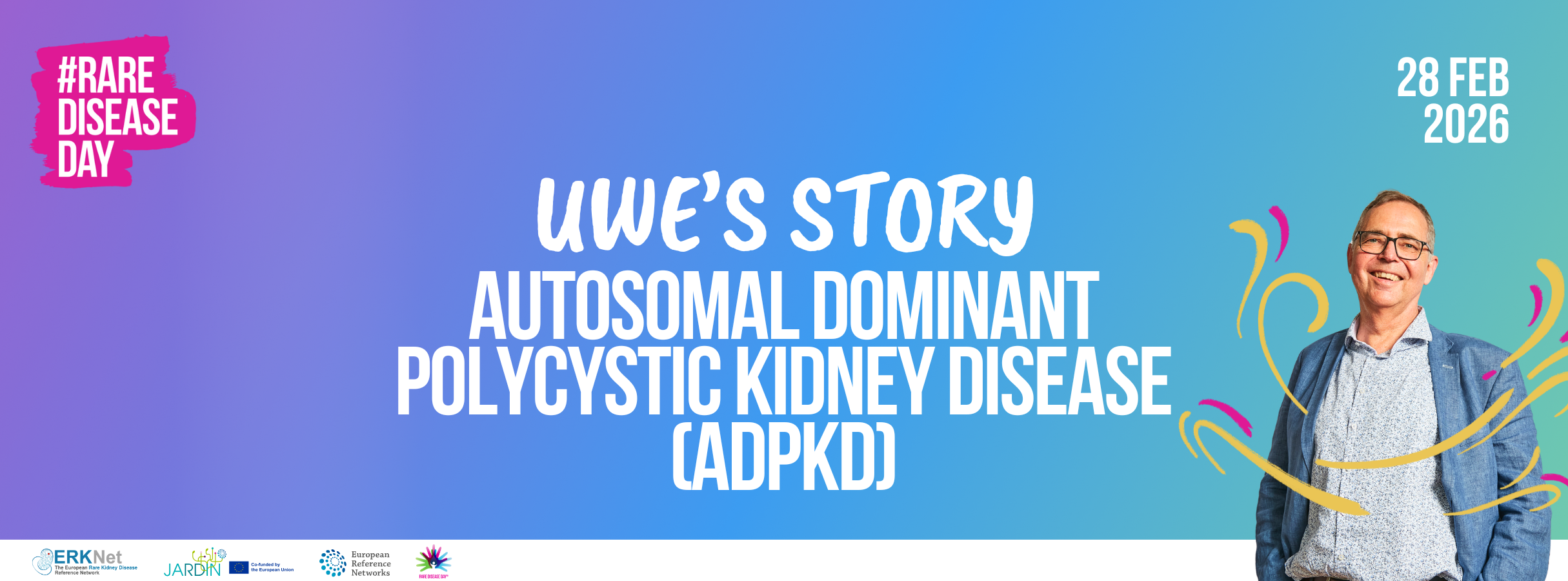
My Journey with Polycystic Kidney Disease – Why Rare Disease Day Matters
Diagnosis and Early Experience
I was 25 years old when I received the diagnosis of Autosomal Dominant Polycystic Kidney Disease (ADPKD). At that time, my life was full of possibilities. I was focused on building my career, making plans for the future, and illness was far from my mind. The news was a shock, especially since I felt healthy and did a lot of sports. Yet, I was told that my kidneys would gradually fail. Like many people living with a rare disease, I suddenly faced a future filled with uncertainty—one that most people around me could not fathom.
Living with ADPKD
For many years, ADPKD remained a quiet companion. I continued working and lived my life, making a conscious effort not to let the disease define who I was. However, the progression was unrelenting. My kidney function declined, fatigue became more pronounced, and pain began to affect my daily life. Living with a rare disease often means being invisible: the struggle is real, but it is not always seen or understood by others. The impact goes beyond the physical—it shapes identity, relationships, and the choices we make in life.
Dialysis: A Turning Point
At the age of 48, my kidneys failed, and I had to begin peritoneal dialysis. This marked a significant turning point. Dialysis was lifesaving, but it also took away much of my independence. I had to stop my work as Consultant and Senior project manager. My days became organized around treatments, my energy was limited, and my world grew smaller. Like many with rare diseases, I experienced firsthand how unequal access to care, knowledge, and support can profoundly affect a patient’s life.
Transplantation and Renewal
Two years later, when I was 50, I received a kidney transplant—from my wife. Words cannot fully capture what it means to receive such a gift, which is rooted in love, trust, and courage. The transplant gave me a second chance at life. Recovery was challenging, but strength gradually returned, bringing hope with it. This experience reminded me that behind every medical achievement, there are human stories that go beyond what anyone can imagine.
Advocacy and Patient Representation
Going through diagnosis, dialysis, and transplantation changed my perspective permanently. I realized that people with rare diseases are frequently left to navigate complex healthcare systems on their own. Expertise is scattered, care is fragmented, and patients are expected to be resilient in systems that are not always designed for their needs. This understanding motivated me to become deeply involved in patient advocacy.
I became a founding member of PKD International and later founded PKD Germany in 2004, driven by a commitment that no patient should be left behind. I also had the privilege to serve as Co-Chair of the Patient Representation in ERKNet until 2025. Through ERKNet, I witnessed how European collaboration can help reduce inequalities, connect expertise across borders, and ensure patients are at the heart of care. European Reference Networks (ERNs) demonstrate what is possible when knowledge is shared and patient voices are truly heard.
ERKNet supported me not only as a patient but also empowered me as an advocate. It showed me that living with a rare disease is not just about surviving, but about being seen, heard, and respected.
The Importance of Rare Disease Day
Rare Disease Day holds deep personal significance for me. It is a day dedicated to raising awareness, demanding equity, and reminding society that rare diseases are more complex than many realize. Although each rare disease may affect only a small number of people, collectively we are millions—and we deserve equal access to diagnosis, care, and innovation.
We celebrate Rare Disease Day because increased awareness saves time, and time saves lives. Earlier diagnosis, coordinated care, and strong support networks can dramatically improve outcomes. Rare does not mean insignificant.
Looking Forward
My journey with PKD has taken me from diagnosis at age 25, to dialysis at 48, to transplantation at 50—and to a lifelong commitment to advocacy. On Rare Disease Day 2026, I stand as a patient, a transplant recipient, and a representative of our community. Our stories matter. Our lives matter. Together, we can ensure that no one living with a rare disease is left behind.


