 CONTACT





- ERNs
- Patient Stories
- ANA'S STORY

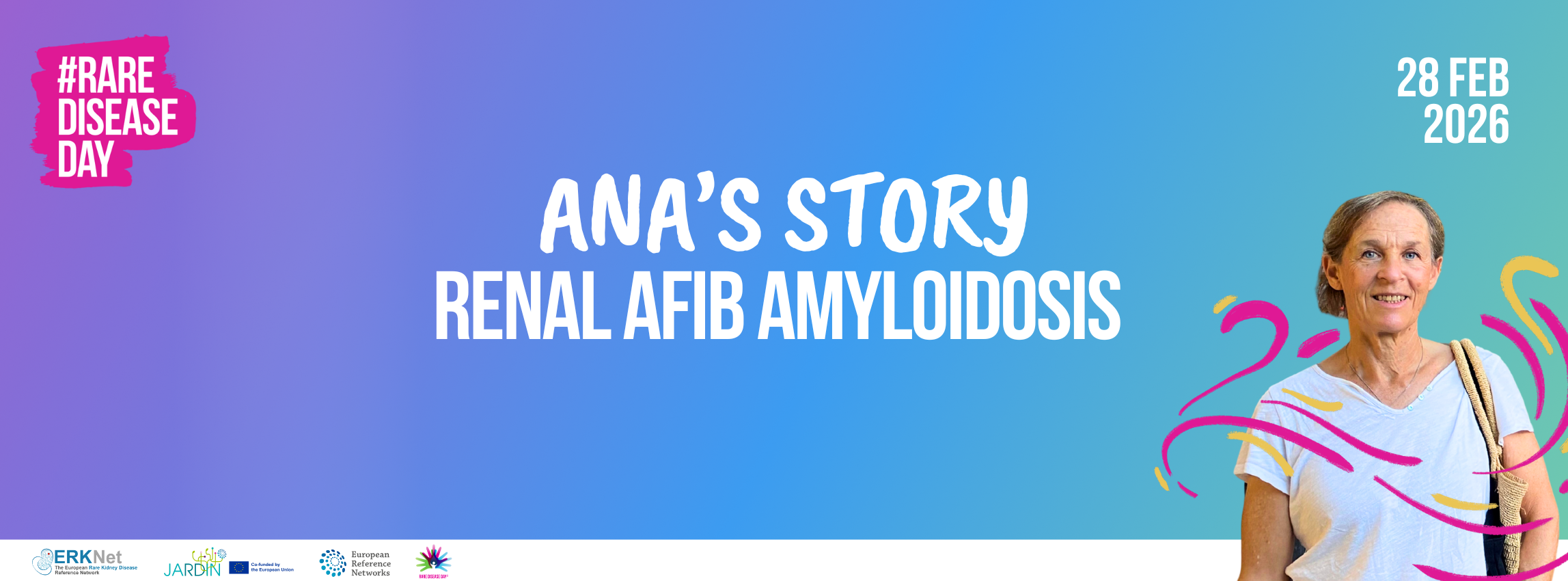
In 2023, Fundación Puigvert in Barcelona, Spain, diagnosed 4 of the 5 siblings in our family with a fibrinogen mutation: the heterozygous FGA c.1718G>T p.(Arg573Leu) variant, which causes hereditary renal AFib amyloidosis. Our mother died from this disease more than 13 years ago.
Since then, many of us started showing symptoms after the age of 60. Of the 4 affected siblings, one remains asymptomatic, another required a kidney transplant after several months on dialysis, and the other two currently present with significant proteinuria.
At present, there are no specific therapies available that eliminate amyloid production and/or promote its clearance. As carriers of the mutation, our only option is to witness the gradual deterioration of kidney function from one medical consultation to the next. We are all under regular follow-up by nephrologists within the Spanish public healthcare. The affected siblings have 5 children in total, all in their twenties, none of whom have yet undergone genetic testing.
To date, we have not been able to identify any other patients worldwide with this specific genetic variant. For this reason, we are seeking expert guidance on the next steps to take. With the support of ERKNet, we are organising a survey to identify additional patients, with the hope of expanding research opportunities and accelerating progress.
In search of support and advocacy, I am an active member of several patient organizations: AIRG- ESP (Spanish Association for Research and Information on Genetic Kidney Diseases, ASPACAM (Spanish Association of Patients with Amyloidosis), and I am also an ePAG in the Glomerular Hereditary Renal Diseases Working Group of ERKNet.
The questions that most concern us are the following:
- – Disease onset
:Regarding the origin of the symptoms, it would be interesting to understand why symptoms occur in old age, so we can control them at some stage. - – Gene based therapies: Since fibrinogen is synthesised in the liver, advancing research into gene therapy to correct or silence the mutation could represent a crucial therapeutic strategy to correct or eliminate the mutation.
- – Amyloid clearance: Monoclonal antibody therapies are currently being studied for other forms of amyloidosis. Some may have potential as “pan-amyloid” treatments, and their application to AFib amyloidosis could be of great help to eliminate or dissolve amyloid deposits.
- – Renal regeneration: Ongoing research into stem cell therapies for kidney regeneration could offer hope for repairing renal damage caused by amyloid deposition.
We would be deeply grateful for any guidance on how to foster such research initiatives, identify viable pathways, and connect with the right experts and institutions. Our shared goal is to move closer to effective treatments—and ultimately, to a cure.


