 CONTACT



- ERNs
- Patient Stories
- LIANA'S STORY

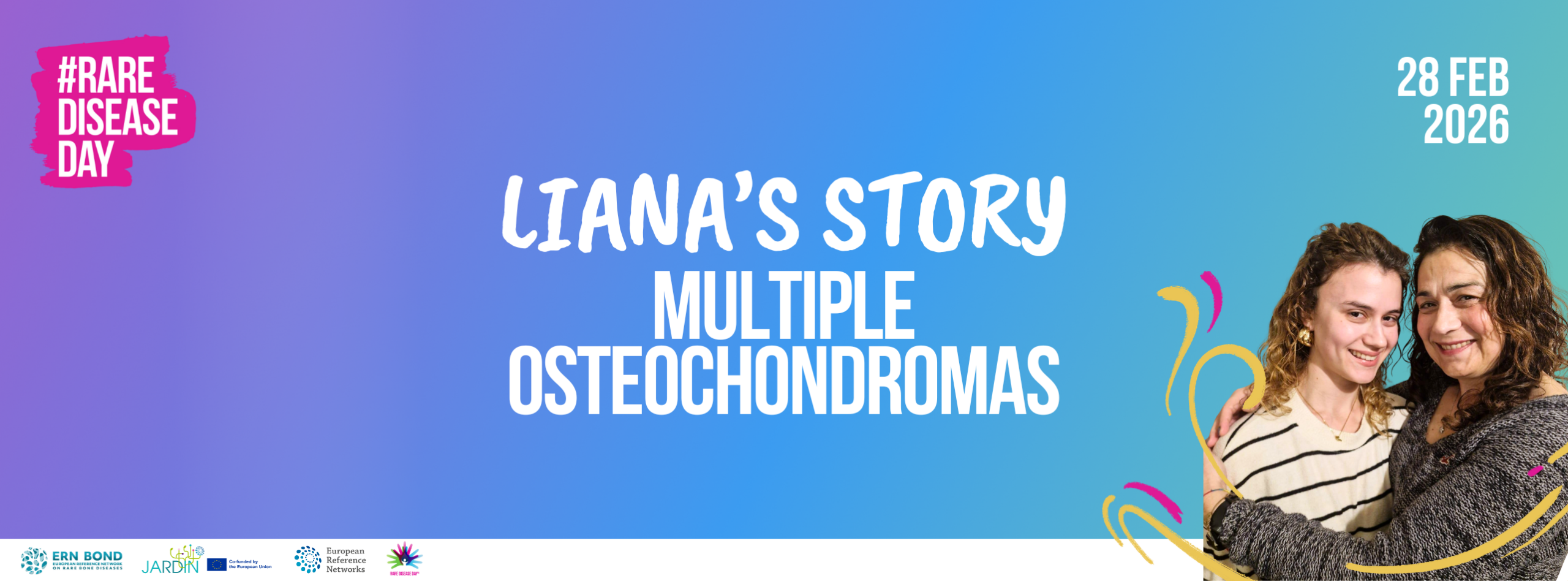
“I did not choose a rare disease. It was a rare disease that chose me.”
My name is Liana la Forgia, and like so many parents in the rare disease community, my journey began the day my daughter was born. From the beginning, our lives have been shaped by hospital appointments, uncertainty, and the constant search for answers. Nothing prepares you for the moment you are told that your child has a rare disease, a condition few people have ever heard of. It took time before we received a clear diagnosis and like many rare disease families, we experienced delays, confusion and a lack of information. My daughter was born with Multiple Osteochondromas, a rare bone disease that affects around 1 in 50,000 people. It is also known as Hereditary Multiple Exostoses, as it can be passed down through families. In our case, this rare condition became part of our lives from her very first days.
Multiple Osteochondromas cause multiple benign bone growths to develop, often during childhood. While the word “benign” can sound reassuring, the reality is far more complex. These growths can cause pain, restricted movement, limb length differences, nerve compression and repeated surgeries. They affect not only physical health, but emotional wellbeing, education, employment and everyday quality of life. My daughter is now an adult, and this condition has shaped every stage of her life, from childhood through toadulthood, in ways most people never have to consider. She has lived her entire life navigating the physical, emotional and practical challenges that come with a condition most people, including many professionals, know very little about.
Living with a rare disease often means becoming an advocate by necessity. Parents and patients are forced to become experts, repeatedly explaining their condition, correcting misinformation and pushing for referrals or accommodations that should already exist. This constant advocacy takes a toll, yet it remains invisible to those outside the rare disease community. It is crucial to understand the importance of recognising that people living with rare diseases often start at a disadvantage: delayed diagnosis, limited specialist knowledge, fewer treatment options and a lack of coordinated care. The “one size fits all” healthcare approach simply does not work for rare conditions.
As a parent, I am aware of the fights to be heard, repeatedly explaining the same condition to new professionals and advocating for care that should have been accessible without constant struggle. It has meant watching my daughter manage pain and limitations while navigating systems that were never designed with rare disease in mind. It has also meant seeing how easily rare diseases can be overlooked because they affect “too few” people, even though, collectively, rare diseases affect millions worldwide.
This is why knowing that there is a dedicated European Reference Network for rare diseases is so important. ERN BOND brings together researchers, specialists and clinicians who work tirelessly to address the gaps and unmet needs of patients, improving knowledge, sharing expertise and helping ensure that people with rare bone diseases are not left behind. If this network existed when my daughter was younger, it could have meant faster access to specialist expertise and less uncertainty for our family.
Equity in rare disease means designing systems that work for real people, not just the majority. It means listening to lived experience and involving rare disease voices in decision-making and ensuring care does not end at adulthood. Rare disease does not stop at childhood, and neither should care.
Raising awareness is not just about sharing diagnoses, it is about lived realities and meaningful change. Rare disease does not mean rare challenges. Families, carers and individuals live with these conditions every single day. Families fight for equity, with equity meaning timely diagnosis, informed healthcare professionals, access to appropriate support and policies that include rare disease voices from the start.
On Rare Disease Day, I share our story not for sympathy, but for understanding and change. My daughter did not choose Multiple Osteochondromas, and neither did our family. By listening to the real disease community, we can choose equity, awareness and a future where no one is left behind simply because their condition is rare.


