 CONTACT





- ERNs
- Patient Stories
- JUAN'S STORY
JUAN’S STORY
- February 09th, 2026
- ERN TransplantChild. ERN on transplantation in children
-
 Spain
Spain
- Share
What is a transplant?
A doctor would probably say: “It is a surgical procedure in which an organ, tissue or cells are removed from one body (the donor) to be implanted into another body (the recipient), with the aim of restoring physiological functions that have been lost or impaired due to disease or damage.”
But would someone who isn’t a doctor say the same? Even without using the exact words, I bet they would. One last question: would a transplant patient say it too?
Perhaps at this point, the answer is no longer just a clinical definition, but something as varied as the sum of all transplant patients – past, present, and future. Why is that?
Because, as with any illness, every transplant carries its own unique story. It is not simply a medical procedure.
It is a turning point in a patient’s life.
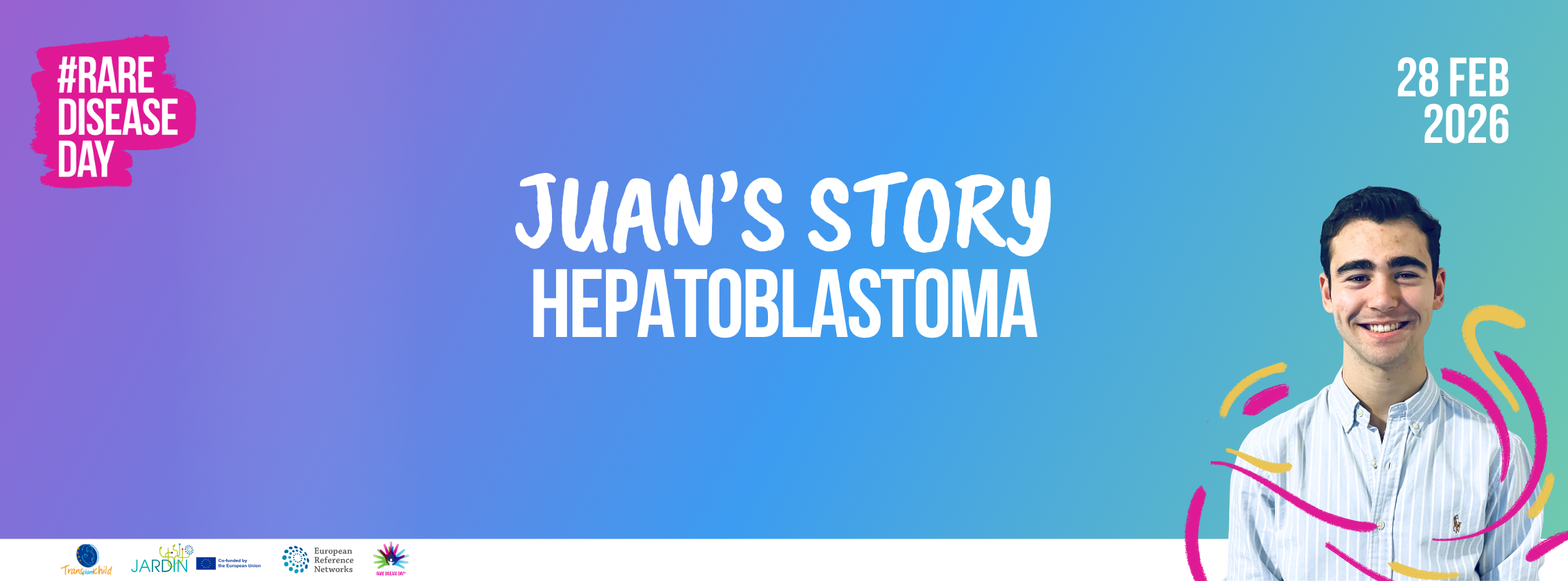
My name is Juan Prieto. I was born in Valladolid, Spain. I am 19 years old and received a liver transplant at La Paz Hospital when I was two, after an aggressive hepatoblastoma put my life at risk.
I am delighted to be able to talk about what it means to live with a transplant. Fortunately, in my case, the graft I received has caused no problems since then.
However, that does not mean that the impact of the transplant on my life has been small.
Along this journey, I have learned (and continue to learn and discover) a valuable lesson as a patient, as simple as it is powerful: I might not still be here, but I have received the gift (entirely free) of remaining in this world. I have been given a second chance.
Perhaps that is the most fitting answer to the question of what a transplant is, or at least the fundamental element of any possible answer.
Yes. Of course, I have gained the independence to take my medication, go to the pharmacy, attend appointments, go for blood tests, manage my schedules, and organise my medical reports…
Of course, I have acquired the autonomy to ask the right questions in consultations, so I can build a strong doctor–patient relationship and ensure the best possible care for my transplant.
I have learned many things. But no matter how independent, responsible, or meticulous I become, what I will never stop learning each day is gratitude.
Simply giving thanks for still being here. Thanking my parents, especially my mother, who was the donor of my graft; my family; my doctors…
No gratitude could ever match the immense gift they have given me. However, the greatest gratitude I can express is simply to give back freely what was freely given to me. What does that mean? It means that if I have been cared for without cost, the least I can do -and what a privilege it is to do so- is to care for others freely, whoever they may be, to the fullest.
In this sense, for me, the transplant is a point of no return that allows me to see myself as someone new, someone reborn. Amidst my struggles, limitations, and fears; my hopes, dreams, plans, successes, and failures; my virtues and flaws; my expectations, the transplant is nothing less than the defining mark of who I am: someone open to love.
Ultimately, someone whose scar reminds you, just by looking at the flesh, that they are eager to express a heartfelt “thank you” by caring for you.
¿Qué es un trasplante?
Probablemente, un médico diría: “Es un procedimiento quirúrgico mediante el cual se extrae un órgano, tejido o células de un cuerpo (donante) para implantarlos en otro cuerpo (receptor), con el objetivo de restaurar funciones fisiológicas perdidas o alteradas debido a enfermedades o daños.”
¿Lo diría también quien no fuera médico? Aún sin usar las mismas palabras, apuesto a que sí. Venga, la última: ¿lo diría también… un paciente trasplantado?
Quizás es en este punto donde la respuesta ya no es una mera definición de un término clínico, y más bien, es tan variable como el conjunto de todos los pacientes trasplantados, pasados, presentes y futuros. ¿El porqué?
Porque, al igual que con cualquier proceso de enfermedad, cada trasplante lleva consigo una historia única. No es simplemente una intervención médica.
Es un punto de inflexión en la vida del paciente.
Mi nombre es Juan Prieto. Nací en Valladolid, España. Tengo 19 años y recibí un trasplante de hígado en el Hospital de La Paz a la edad de 2 años, cuando un hepatoblastoma agresivo puso en riesgo mi vida.
Estoy encantado de poder hablar de lo que significa vivir con un trasplante. Por fortuna, en mi caso, el injerto que recibí no ha presentado ningún problema desde entonces.
Sin embargo, eso no significa que el impacto del trasplante en mi vida haya sido bajo.
A lo largo de este camino, he aprendido (y sigo aprendiendo y descubriendo) una valiosa lección como paciente, tan simple como poderosa: yo podría no seguir en este mundo, pero he recibido el regalo (completamente gratis) de permanecer en él. He recibido una segunda oportunidad.
Probablemente esa sea la respuesta más adecuada a la cuestión de qué es un trasplante, o, al menos, el elemento fundamental de todas las posibles respuestas que puede ofrecer.
Sí. Por supuesto que he adquirido autonomía para tomar la medicación, ir a la farmacia, ir a la consulta, ir al análisis de sangre, gestionar las citas, organizar los informes médicos…
Por supuesto que he adquirido la autonomía necesaria para hacer las preguntas correctas en la consulta con el fin de establecer una buena relación médico-paciente, y así favorecer un mejor cuidado de mi trasplante.
He aprendido muchas cosas. Pero, sin importar cuán autónomo sea, cuán responsable o riguroso, lo que nunca dejaré de aprender cada día es a dar las gracias.
Dar gracias, sencillamente, por seguir aquí. Dar las gracias a mis padres, especialmente a mi madre, quien fue el donante de mi injerto; a mi familia, a los médicos…
Ninguna gratitud estará nunca a la altura del gran regalo que me han hecho. No obstante, la máxima gratitud que yo puedo expresar es, simplemente, devolver gratis lo que a mí gratis me han dado. ¿Qué significa eso? Significa que si a mí me han cuidado gratis, lo mínimo que yo debo hacer – ¡y qué privilegio poder hacerlo!- es cuidar gratis a los demás, sea quien sea, al máximo.
En este sentido, para mí el trasplante es un punto de no retorno que me permite mirarme a mí mismo como alguien nuevo, como alguien que ha vuelto a nacer. En medio de mis dificultades, mis límites y miedos, mis deseos, ilusiones, sueños, proyectos, éxitos y fracasos, virtudes y defectos, expectativas, el trasplante es nada más y nada menos que el mejor sello de identidad que define quién soy: alguien que está abierto a amar.
En definitiva, alguien cuya cicatriz te recuerde, nada más mirarla en mi propia carne, que tiene ganas de expresar un rotundo “gracias” a base de cuidarte.


