 CONTACT





- ERNs
- Patient Stories
- ANTONIJA'S STORY

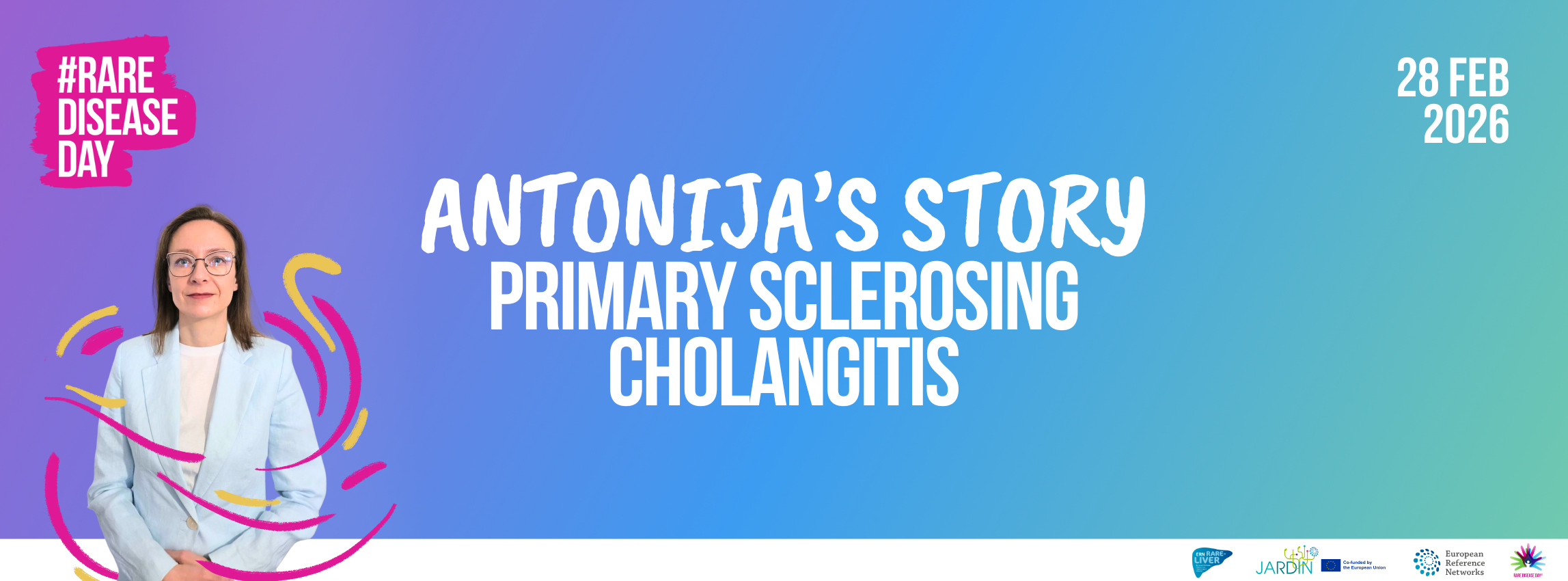
Living with a rare liver disease: my journey and the role of ERN Rare-Liver
Living with a rare disease often means living with uncertainty long before you receive a diagnosis. For years, my symptoms were seen only as elevated liver enzymes. I was underweight, had persistent stomach pain and was often accused by doctors of smoking or damaging my liver with alcohol, even though I did not consume either.
Like many people with rare diseases I moved through the healthcare system without clear answers. Medical appointments focused on individual symptoms rather than the whole picture, and a rare liver disease was not an obvious or immediate consideration.
It took six years to receive the correct diagnosis and I was diagnosed with primary sclerosing cholangitis and ulcerative colitis. Primary sclerosing cholangitis (PSC) is a rare chronic liver disease causing inflammation, scarring (sclerosis) and narrowing of bile ducts, leading to bile buildup, liver damage, cirrhosis, or failure, often linked with Inflammatory Bowel Disease (IBD). At that time, I was not even aware that my condition was rare. The information that the disease could not be cured did not come through a proper explanation from a specialist, but rather from a brochure. The only treatment option mentioned was liver transplantation, and my gastroenterologist said that this might be necessary at some point.
Receiving a diagnosis was both frightening and relieving: frightening because of what it meant for my future but relieving because I finally had a name for what was happening to me. Looking back, I often feel that the hardest part was living without a diagnosis. I had to face questions and comments from people around me about my health while appearing completely healthy, despite being seriously ill. I was sick without a diagnosis, yet appeared well on the outside.
As my condition worsened, liver transplantation became part of my reality. Five years after my diagnosis, I underwent a routine ERCP during which a stent had to be placed in my main bile duct. After several procedures, I developed sepsis and was placed on the national liver transplant waiting list. I remained on the list for almost a year, with my status changing repeatedly between active and inactive. That year was marked by intense emotional and psychological struggle, combined with severe fatigue and abdominal pain.
Facing liver transplantation forces you to confront questions about mortality, dependency, and identity. After transplantation, life does not simply return to what it was before. There is gratitude, of course, but also fear of complications, infections, rejection and the long-term consequences of immunosuppression. Living with a transplanted organ means ongoing care, frequent monitoring, and constant awareness that your health can change quickly.
A liver transplant does not cure my disease. As PSC is autoimmune in nature, it can recur. Five years after my first transplant, PSC returned and in 2020 I underwent my second liver transplant.
Throughout this journey, one of the most difficult aspects was the feeling of isolation. Rare diseases are, by definition, uncommon. This often means limited local expertise, few fellow patients to connect with, and a sense that your experience is not fully understood. When I was diagnosed in 2008, there were no patient organisations in Croatia, and it was not possible to meet others living with the same condition. A few of us connected through online forums and only met each other in person after we had undergone liver transplantation.
Years of living without patient support structures motivated me to establish the Croatian Rare Liver Foundation in 2024. Through this work, I later joined the European Reference Network for Rare Liver Diseases (ERN Rare-Liver) as a patient representative.
ERN Rare-Liver represents something that is deeply needed by patients like me: structured, cross-border collaboration that brings together expertise that may not exist within a single country or centre. Knowing that my condition is part of a wider European framework changed how I perceived my own care. It meant that my disease was not “too rare to matter,” but recognised as part of a shared challenge requiring collective knowledge and cooperation.
From a patient perspective, ERN Rare-Liver helps bridge the gap between national healthcare systems and specialised expertise. It supports clinicians by enabling discussion of complex cases, while also empowering patients by validating their experiences. Being involved in patient advocacy connected to ERN has shown me that patients are not passive recipients of care. Our lived experience adds an essential layer of understanding that complements clinical knowledge.
Living with a rare liver disease does not end with a diagnosis or a transplant. It is an ongoing process of adaptation. There are good days and difficult ones, moments of stability and moments of fear. What ERN Rare-Liver offers is reassurance that no one has to face this journey alone or within the limits of a single healthcare system.
For patients like me, ERN Rare-Liver represents hope grounded in collaboration, expertise and mutual respect. It acknowledges the complexity of rare liver diseases and responds not with isolation, but with connection.


